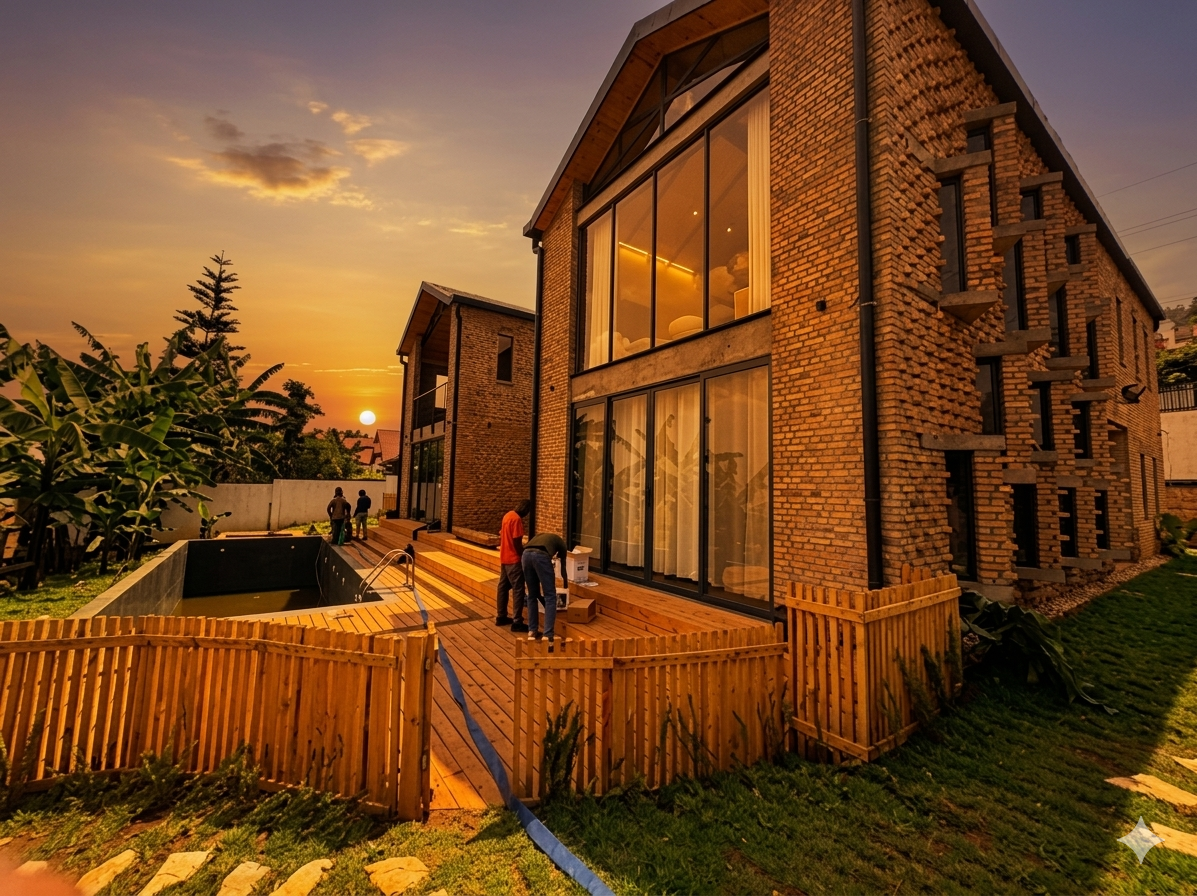
Rwanda's Soul in Contemporary Forms
Rwanda has always been a nation where tradition and modernity dance together. Nowhere is this more evident than in contemporary architecture that draws inspiration from imigongo—Rwanda's iconic geometric art form. This ancient tradition of creating intricate, colorful patterns is finding powerful expression in 21st-century design, transforming how we think about Rwandan spaces. Let's explore how architects are weaving this cultural heritage into the buildings defining modern Rwanda.
Understanding Imigongo: Rwanda's Living Art
Imigongo originated in southwestern Rwanda's Hutu and Tutsi communities as a form of artistic expression and social bonding. These geometric paintings—typically featuring diamonds, chevrons, and interlocking patterns in vibrant colors—adorned dwelling walls for centuries. What makes imigongo special is its combination of cultural significance, mathematical precision, and sheer visual beauty.
- Historical Significance: Imigongo represents centuries of Rwandan artistic heritage and cultural pride
- Design Elements: Repeating geometric patterns create rhythm, movement, and visual harmony
- Color Symbolism: Traditional colors convey meaning—reds for vitality, blacks for strength, whites for purity
- Community Practice: Creating imigongo was traditionally a communal activity strengthening social bonds
Contemporary Architects Embrace Geometric Traditions
Forward-thinking architects in Kigali and across Rwanda are translating imigongo principles into contemporary design language. Rather than copying traditional patterns, they extract the underlying geometric logic and apply it to modern materials and building systems.
- Parametric Design: Mathematical algorithms generate building forms inspired by imigongo geometry
- Facade Systems: Perforated metal, wood screens, and concrete panels reference chevron and diamond motifs
- Interior Expressions: Ceiling treatments, floor patterns, and wall installations echo traditional designs
- Public Spaces: Plazas, parks, and roadways incorporate imigongo-inspired paving and landscaping
Applications in Residential Design
High-end residential projects increasingly incorporate imigongo-inspired elements that make homes distinctly Rwandan while maintaining contemporary sophistication.
- Facade Treatments: Geometric screens create visual Interest while providing privacy and solar shading
- Interior Finishes: Custom tilework, wallpapers, and paint treatments reference traditional patterns
- Artistic Integration: Commissioned imigongo artwork becomes statement pieces in living spaces
- Spatial Planning: Room layouts echo the geometric harmony inherent in traditional designs
Commercial and Civic Applications
Commercial buildings and civic institutions are embracing imigongo aesthetics to create unmistakably Rwandan identity while conveying cultural pride and contemporary sophistication.
- Office Buildings: Geometric patterns on facades create visual identity distinctive to companies
- Hospitality Spaces: Hotels and restaurants use imigongo-inspired design to create unique guest experiences
- Government Buildings: Civic projects increasingly feature cultural design elements reinforcing national identity
- Educational Facilities: Schools and universities incorporate design as tool for educating future architects
Material and Technical Innovation
Modern construction techniques enable designers to realize imigongo inspiration in ways impossible through traditional means. Contemporary materials bring new possibilities for expression while honoring traditional aesthetics.
- Metal Fabrication: Laser-cut steel and aluminum create precise geometric expressions at scale
- Concrete Technologies: Textured concrete, casting, and coloration techniques produce sophisticated effects
- Digital Printing: Custom graphics translate traditional patterns onto glass, tiles, and wall coverings
- 3D Modeling: Computer design enables complex geometric forms grounded in traditional principles
The Psychology of Imigongo in Modern Spaces
Beyond aesthetics, imigongo-inspired design creates psychological and emotional effects that enhance the spaces where we live and work. The geometric patterns engage the mind while creating visual harmony that research suggests improves wellbeing.
- Visual Order: Geometric patterns create sense of harmony and logic that pleases the eye and mind
- Cultural Connection: Rwandan design creates connection to heritage and national identity
- Artistic Engagement: The patterns invite contemplation and interpretation, enriching user experience
- Wayfinding: Distinctive patterns help users navigate spaces while creating memorable experiences
Sustainability and Local Production
Imigongo-inspired design often promotes local production methods and sustainable materials. Artisans create hand-painted and hand-crafted elements, supporting local economies while maintaining environmental responsibility.
- Artisan Collaboration: Projects partner with traditional craftspeople, preserving cultural skills
- Local Materials: Traditional earth pigments, local woods, and handmade textiles create authentic expressions
- Economic Impact: Valuing traditional crafts within modern design supports rural livelihoods
- Environmental Responsibility: Hand-crafted elements reduce industrial production impacts
The Future of Imigongo in Architecture
As Rwanda continues developing its architectural identity, imigongo-inspired design will likely become increasingly prominent. The tradition represents a uniquely Rwandan design language that distinguishes the nation's built environment while remaining forward-looking and contemporary. International architects working in Rwanda increasingly study imigongo to understand its potential applications.
A Living Tradition Meeting Modern Times
Imigongo demonstrates architecture's power to honor tradition while embracing modernity. By weaving cultural heritage into contemporary design, Rwanda creates spaces that tell the nation's story—spaces that are distinctly Rwandan, unmistakably beautiful, and unapologetically modern.
The future of Rwanda's architecture will be written in geometric patterns, vibrant colors, and the marriage of tradition and innovation. At Thousand Homes, we're committed to projects that celebrate Rwandan heritage while building the nation's contemporary future. When you build with us, you're not just constructing buildings—you're contributing to Rwanda's ongoing architectural story.