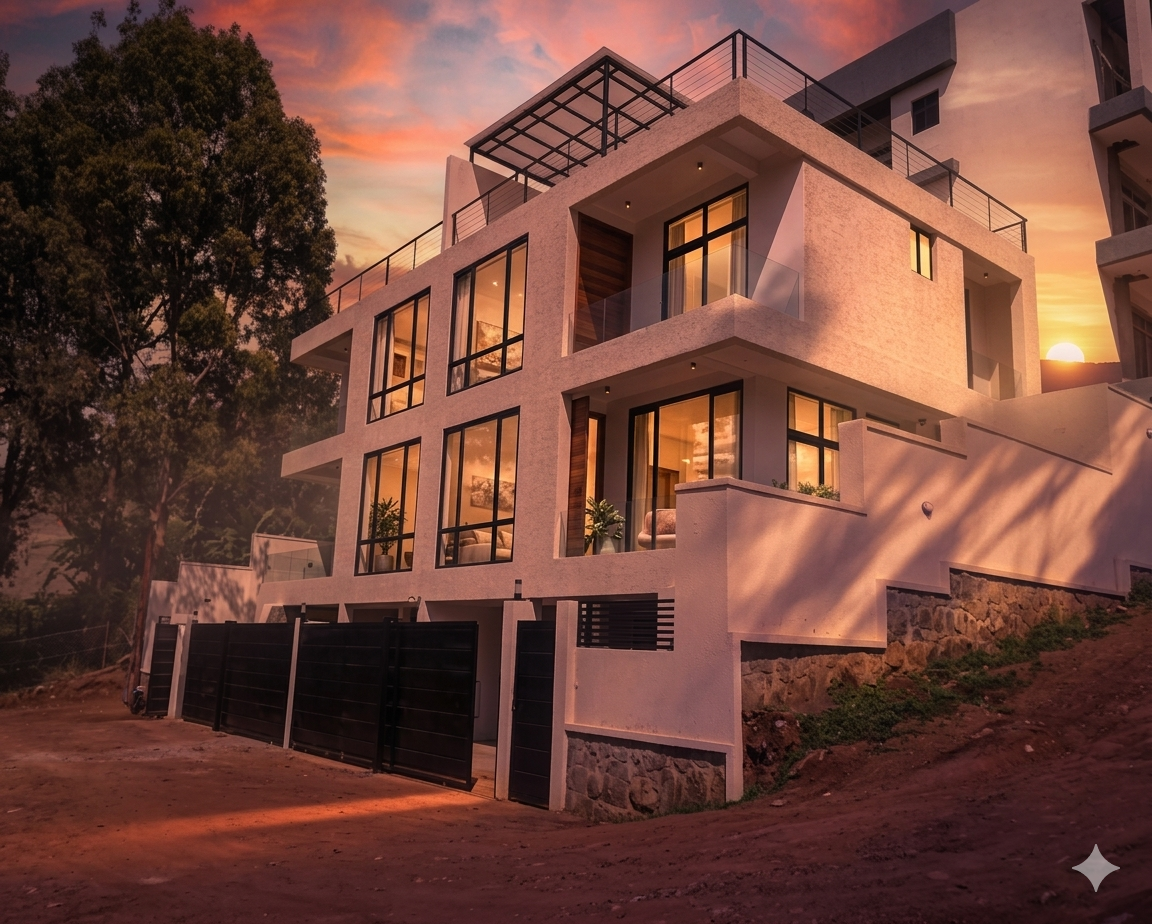
Building a Sustainable Future in Rwanda
Rwanda's rapidly developing construction landscape presents a unique opportunity to embrace sustainable building practices from the ground up. As one of Africa's fastest-growing nations, integrating green building techniques into residential projects is not just an environmental imperative—it's an economic advantage. At Thousand Homes, we're committed to pioneering sustainable construction methods that reduce environmental impact while maintaining the quality and comfort our clients expect.
1. Solar Panels and Renewable Energy Systems
Rwanda's equatorial location provides abundant sunshine year-round, making solar energy one of the most practical renewable solutions for residential builds. Installing solar photovoltaic (PV) systems reduces electricity dependency on the national grid and significantly cuts long-term energy costs.
- Cost Savings: Solar systems pay for themselves within 5-7 years in Rwanda's climate, with 20+ years of performance thereafter
- Energy Independence: Homeowners generate their own electricity, protecting against power outages
- Government Incentives: Rwanda's government actively promotes renewable energy adoption with favorable tax policies
- Battery Storage: Modern lithium-ion battery systems store excess solar energy for nighttime use
2. Rainwater Harvesting Systems
Water scarcity is a growing concern in urban areas. Rainwater harvesting captures precipitation from roofing systems and stores it for irrigation, toilet flushing, and other non-potable uses, reducing municipal water consumption by up to 50%.
- Storage Tanks: Underground or above-ground systems capture clean rainwater efficiently
- Filtration Systems: Multi-stage filters ensure water quality for various household applications
- Reduced Bills: Lower water consumption translates to substantial monthly savings
- Environmental Impact: Reduces stress on Kigali's congested water infrastructure
3. Green Building Materials and Insulation
Choosing sustainable materials during construction reduces environmental footprint while improving home performance. Local and recycled materials support Rwanda's circular economy while minimizing transportation emissions.
- Thermal Insulation: Proper wall and roof insulation maintains comfortable indoor temperatures, reducing HVAC demands
- Local Materials: Using locally-sourced stone, bamboo, and timber supports regional suppliers and reduces carbon transport
- Low-VOC Paints: Non-toxic finishes improve indoor air quality and reduce environmental toxins
- Recycled Aggregates: Sustainable concrete options using recycled waste materials
4. Energy-Efficient Design and Natural Ventilation
Strategic architectural design maximizes passive cooling and heating, reducing reliance on mechanical systems. Proper orientation, window placement, and ventilation naturally regulate indoor temperatures.
- Passive Solar Design: Building orientation captures winter warmth while minimizing summer heat gain
- Cross-Ventilation: Strategically placed windows enable natural air circulation throughout the home
- Thermal Mass: Concrete and stone absorb and release heat gradually, stabilizing indoor temperatures
- Smart Window Design: Larger south-facing windows with proper overhangs reduce cooling costs
5. Waste Management and Environmental Landscaping
Comprehensive waste management systems and greenery integration create homes that live in harmony with their environment. Native plants and composting reduce waste while improving property aesthetics.
- Composting Systems: Organic kitchen and garden waste convert to nutrient-rich soil amendments
- Native Landscaping: Indigenous plants require less water and maintenance while supporting local biodiversity
- Permeable Paving: Driveways and pathways that allow water infiltration reduce flooding and recharge groundwater
- Green Roofs: Vegetation-covered roofs provide insulation, manage stormwater, and extend roof lifespan
The Economic and Environmental Case for Sustainable Homes
Building sustainably isn't an expense—it's an investment. Homes incorporating these practices command premium resale values, attract environmentally-conscious buyers, and deliver measurable cost savings over their lifetime. In Rwanda's rapidly appreciating real estate market, sustainable homes are positioned to capture significant value appreciation.
Thousand Homes is leading the charge in sustainable construction across Rwanda. Our projects integrate multiple green technologies tailored to each client's budget and environmental goals. Whether you're planning a new home in Kigali, Kicukiro, or any Rwandan district, our team can help you build a sustainable future.